
Car and truck oil drain plug sizes can be confusing, especially if you slide under your vehicle ready for an oil change and realize you have no idea which socket you need. Plug sizes vary between makes, models, and engines, and even different years of the same vehicle can use different drain bolts. The good news is that most manufacturers reuse the same sizes across multiple engines and model years, so once you know what your vehicle takes, the job gets much easier every time.
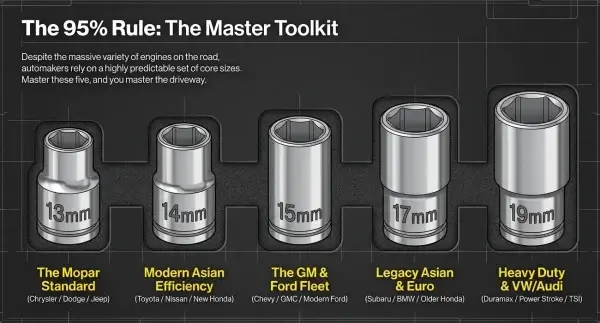
Quick answer: The most common oil drain plug sizes are 13 mm, 14 mm, 15 mm, 17 mm, and 19 mm. Use the lookup tool below to find the exact size for your vehicle, or scan the reference chart further down this page.
How Do I Find My Oil Drain Plug Size?
There are several reliable ways to determine the correct oil drain plug size for your vehicle:
- Use the oil drain plug lookup tool below - the fastest option.
- Check your owner's manual or factory service manual.
- Measure the existing drain bolt head using a socket set.
- Reference the oil drain plug size chart later in this guide.
Because manufacturers sometimes change oil drain bolt sizes between model years and engine variants, always verify the correct size before starting an oil change. Using the wrong size socket can round off the plug head, making removal much more difficult.
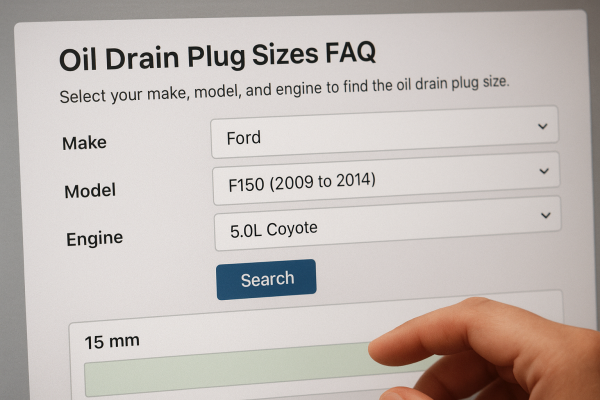
Oil Drain Plug Size Lookup Tool
Use the lookup tool below to instantly find the correct oil drain plug size for your vehicle. Select your make, model, and engine to pull the drain bolt size directly from the database.
Note: This database is expanding and some entries may need verification. The lookup tool always displays the most current information, but if you notice something off, please let me know so I can correct it.

Most Common Oil Drain Plug Sizes by Vehicle Make and Model
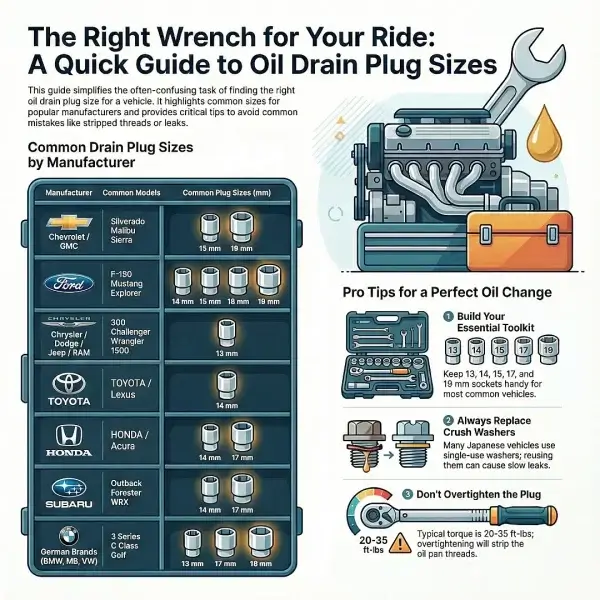
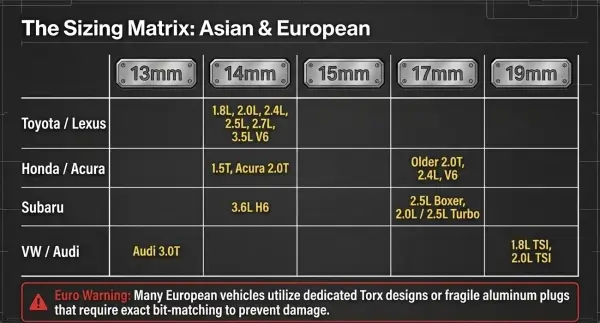
While every vehicle should be verified individually, most manufacturers reuse the same drain plug sizes across multiple engines and model years. The most common socket sizes are 13 mm, 14 mm, 15 mm, 17 mm, and 19 mm. Use the chart below as a quick reference, then confirm with the lookup tool or your owner's manual before beginning the job.
Oil Drain Plug Size Chart
The chart below lists the most common oil drain plug sizes across popular cars and trucks, organized by make, model, and engine so you can quickly find your vehicle. Entries are based on widespread patterns used by manufacturers, with new vehicles added as more engines are verified.
| Make | Model | Engine(s) | Oil Drain Plug Size |
|---|---|---|---|
| Chevrolet | Malibu | 1.5T, 2.5L | 15 mm |
| Chevrolet | Silverado 1500 | 4.3L V6, 5.3L V8, 6.2L V8 | 15 mm |
| Chevrolet | Silverado 2500HD | 6.6L Duramax | 19 mm |
| Chevrolet | Silverado 2500HD | 6.0L V8 | 15 mm |
| Chevrolet | Camaro | 2.0L Turbo, 6.2L V8 | 15 mm |
| Chrysler | 300 | 3.6L Pentastar, 5.7L Hemi, 6.4L Hemi | 13 mm |
| Chrysler | Pacifica | 3.6L Pentastar | 13 mm |
| Dodge | Challenger | 3.6L Pentastar, 5.7L Hemi, 6.2L Hellcat, 6.4L Hemi | 13 mm |
| Dodge | Charger | 3.6L Pentastar, 5.7L Hemi, 6.4L Hemi | 13 mm |
| Dodge | Durango | 3.6L Pentastar, 5.7L Hemi, 6.4L Hemi | 13 mm |
| Ford | F-150 (2004-2008) | 4.6L | 14 mm |
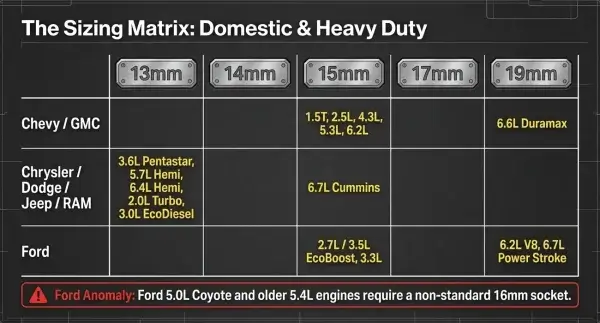
| Ford | F-150 (2004-2008) | 5.4L | 16 mm |
| Ford | F-150 (2009-2014) | 3.5L EcoBoost | 15 mm |
| Ford | F-150 (2009-2014) | 5.0L Coyote | 16 mm |
| Ford | F-150 (2015-present) | 2.7L EcoBoost, 3.3L, 3.5L EcoBoost | 15 mm |
| Ford | F-150 (2015-present) | 5.0L Coyote | 16 mm |
| Ford | Mustang | 2.3L EcoBoost | 15 mm |
| Ford | Mustang | 3.7L V6 (2011-2017), 5.0L Coyote | 16 mm |
| Ford | Explorer | 2.3L EcoBoost, 3.5L V6, 3.3L Hybrid | 15 mm |
| Ford | F-250 | 6.2L V8, 6.7L Power Stroke Diesel | 19 mm |
| GMC | Sierra 1500 | 4.3L V6, 5.3L V8, 6.2L V8 | 15 mm |
| GMC | Sierra 2500HD | 6.6L Duramax | 19 mm |
| Honda | Accord | 1.5T | 14 mm |
| Honda | Accord | 2.0T, 2.4L, V6 (2003-2017) | 17 mm |
| Honda | Civic | 1.8L and 2.0L (2006-present) | 17 mm |
| Honda | CR-V | 2.4L | 17 mm |
| Honda | CR-V | 1.5T | 14 mm |
| Hyundai | Elantra | 2.0L | 17 mm |
| Hyundai | Elantra | 1.6L Turbo | 14 mm |
| Hyundai | Santa Fe | 2.4L, 2.0L Turbo | 17 mm |
| Kia | Sorento | 2.4L, 3.3L | 17 mm |
| Kia | Optima / K5 | 2.4L | 17 mm |
| Kia | Optima / K5 | 1.6L Turbo | 14 mm |
| Jeep | Grand Cherokee | 3.0L EcoDiesel, 3.6L Pentastar, 5.7L Hemi, 6.4L SRT | 13 mm |
| Jeep | Wrangler | 2.0L Turbo, 3.0L EcoDiesel, 3.6L Pentastar | 13 mm |
| Jeep | Gladiator | 3.6L Pentastar, 3.0L EcoDiesel | 13 mm |
| Nissan | Altima | 2.5L, 3.5L | 14 mm |
| Nissan | Frontier | 4.0L V6 | 14 mm |
| Nissan | Rogue | 2.5L | 14 mm |
| RAM | 1500 | 3.0L EcoDiesel, 3.6L Pentastar, 5.7L Hemi, 6.4L Hemi | 13 mm |
| RAM | 2500 | 6.4L Hemi | 13 mm |
| RAM | 2500 | 6.7L Cummins | 15 mm |
| Subaru | Outback / Forester | 2.5L Boxer | 17 mm |
| Subaru | Outback / Forester | 3.6L H6 | 14 mm |
| Subaru | Impreza | 2.5L Boxer | 17 mm |
| Subaru | WRX / STI | 2.0L Turbo Boxer, 2.5L Turbo Boxer | 17 mm |
| Toyota | Camry | 2.4L (2002-2009), 2.5L (2010-present), 3.5L V6 | 14 mm |
| Toyota | Tacoma | 2.7L, 3.5L V6 | 14 mm |
| Toyota | Corolla | 1.8L | 14 mm |
| Toyota | RAV4 | 2.5L, 2.0L Hybrid | 14 mm |
| BMW | 3 Series | 2.0L (N20/B48), 3.0L (N55) | 17 mm |
| BMW | 5 Series | 2.0L, 3.0L | 17 mm |
| Mercedes-Benz | C-Class | 2.0L Turbo | 17 mm |
| Mercedes-Benz | C-Class | 3.0L V6 | 13 mm |
| Mercedes-Benz | E-Class | 2.0L Turbo | 17 mm |
| Mercedes-Benz | E-Class | 3.0L V6 | 13 mm |
| Volkswagen | Golf / GTI | 1.8L TSI, 2.0L TSI | 19 mm |
| Volkswagen | Passat | 1.8T, 2.0L | 19 mm |
| Audi | A4 | 2.0T | 19 mm |
| Audi | A6 | 2.0T | 19 mm |
| Audi | A6 | 3.0T | 13 mm |
| Mazda | Mazda3 | 2.0L, 2.5L | 17 mm |
| Mazda | CX-5 | 2.5L | 17 mm |
| Mitsubishi | Outlander | 2.4L | 17 mm |
| Mitsubishi | Eclipse Cross | 1.5L Turbo | 14 mm |
| Lexus | ES | 2.5L, 3.5L V6 | 14 mm |
| Lexus | RX | 3.5L V6 | 14 mm |
| Acura | TLX | 2.0T, 3.5L V6 | 17 mm |
| Acura | RDX | 2.0T | 14 mm |
Why Using the Correct Wrench Size Matters
Using the right socket or wrench on an oil drain plug is more important than it might seem. A socket that is even slightly too large can slip and round off the plug head, which can turn a simple oil change into an expensive repair. A 6-point socket grips more securely than a 12-point and is the recommended choice for drain plugs. It is equally important not to overtighten the plug after reinstalling it - doing so can strip the threads in the oil pan, particularly on aluminum pans that are common on modern vehicles.
Most Common Oil Drain Bolt Sizes to Have on Hand
Keeping the following socket sizes in your oil change toolkit will cover the vast majority of cars and trucks you're likely to work on:
- 13 mm
- 14 mm
- 15 mm
- 17 mm
- 19 mm
- 21 mm
- 3/8 square drive (some older American trucks)
- Torx-style plugs (some European vehicles)
Oil Drain Plug Torque Specifications
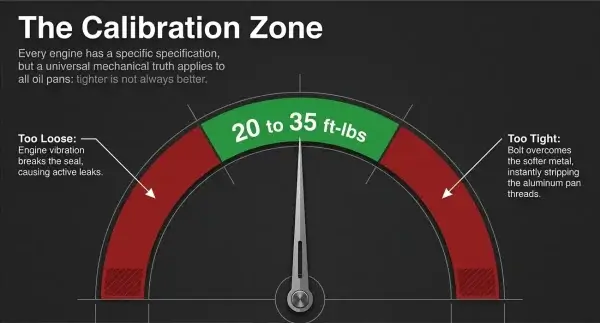
Using the correct torque specification is just as important as using the correct wrench size. Overtightening an oil drain plug can strip the threads in the oil pan, while undertightening can cause leaks or, in extreme cases, the plug backing out while driving.
Most oil drain plugs are tightened to between 20 and 35 ft-lbs, but this varies by manufacturer, engine, and oil pan material. Aluminum oil pans typically require lower torque than steel pans. Always consult your owner's manual or factory service information for the exact specification for your vehicle, and use a torque wrench whenever possible.
Oil Drain Bolt Washers and Sealing Gaskets
Many oil drain plugs rely on a crush washer, sealing washer, or gasket to create a leak-free seal between the drain bolt and oil pan. These inexpensive parts are often overlooked, but a worn or reused washer is one of the most common causes of slow oil leaks after an oil change.
- Many Japanese vehicles use aluminum or copper crush washers that should be replaced at every oil change.
- Some manufacturers use reusable rubber-coated sealing washers that should be inspected for damage before reinstalling.
- European vehicles may use aluminum drain plugs or specialized sealing systems that require OEM replacement parts.
- Reusing a damaged washer can result in drips that appear hours or days after the oil change is complete.
Replacing a sealing washer costs very little and can prevent leaks, damaged threads, and unnecessary repairs down the road.
Oil Drain Valve - No Wrench Needed
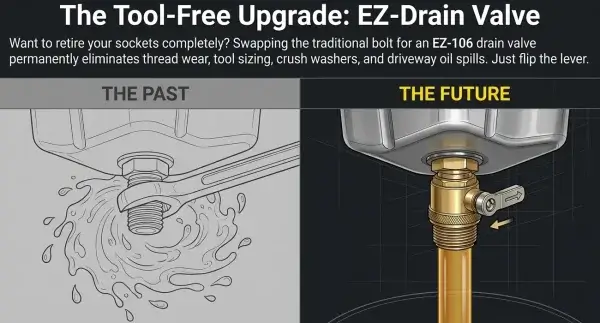
Some DIYers prefer to replace their drain bolt with an EZ-106 oil drain valve, which eliminates the need for any tools during future oil drains. The valve sits away from the main stream of draining oil, making the process cleaner and faster.
If you've ever come across a stripped out oil pan bolt, you'll need an oil drain plug repair kit. Those found in this popular kit cover the essential sizes, making it perfect for most DIY jobs.
Note: This site is an Amazon affiliate, and any purchases made via that EZ-106 oil drain valve or oil drain plug repair kit links help support this site at no additional cost to you.
Oil Drain Plug Sizes FAQ
What is the most common oil drain plug size?
The most common oil drain plug sizes are 13 mm, 14 mm, 15 mm, 17 mm, and 19 mm. The correct size depends on the vehicle manufacturer, model, engine, and year. Toyota and Honda frequently use 14 mm and 17 mm; Chrysler, Dodge, Jeep, and RAM commonly use 13 mm; Chevrolet and GMC trucks typically use 15 mm; Volkswagen and Audi often use 19 mm.
What size is the oil drain plug for the Chevrolet Malibu?
The 1.5T and 2.5L Chevrolet Malibu engines both use a 15 mm drain plug.
What size is the oil drain plug for the Chevrolet Silverado 1500?
The 4.3L V6, 5.3L V8, and 6.2L V8 Silverado 1500 engines all use a 15 mm drain plug.
What size is the oil drain plug for the Chrysler 300?
The 3.6L Pentastar, 5.7L Hemi, and 6.4L Hemi engines all use a 13 mm drain plug.
What size is the oil drain plug for the Dodge Challenger?
The 3.6L Pentastar, 5.7L Hemi, 6.2L Hellcat, and 6.4L Hemi engines all use a 13 mm drain plug.
What size is the oil drain plug for the Dodge Charger?
The 3.6L Pentastar, 5.7L Hemi, and 6.4L Hemi engines all use a 13 mm drain plug.
What size is the oil drain plug for the Ford F-150?
• 2004-2008: 4.6L uses 14 mm; 5.4L uses 16 mm
• 2009-2014: 3.5L EcoBoost uses 15 mm; 5.0L Coyote uses 16 mm
• 2015-present: 2.7L EcoBoost, 3.3L, and 3.5L EcoBoost use 15 mm; 5.0L Coyote uses 16 mm
What size is the oil drain plug for the Ford Mustang?
The 2.3L EcoBoost uses 15 mm. The 3.7L V6 (2011-2017) and 5.0L Coyote engines use 16 mm.
What size is the oil drain plug for the Honda Accord?
The 1.5T uses 14 mm. The 2.0T, 2.4L, and V6 engines use 17 mm.
What size is the oil drain plug for the Honda Civic?
The 1.8L and 2.0L engines (2006-present) both use a 17 mm drain plug.
What size is the oil drain plug for the Jeep Grand Cherokee?
The 3.0L EcoDiesel, 3.6L Pentastar, 5.7L Hemi, and 6.4L SRT engines all use a 13 mm drain plug.
What size is the oil drain plug for the Jeep Wrangler?
The 2.0L Turbo, 3.0L EcoDiesel, and 3.6L Pentastar all use a 13 mm drain plug.
What size is the oil drain plug for the Nissan Altima?
The 2.5L and 3.5L Altima engines both use a 14 mm drain plug.
What size is the oil drain plug for the Nissan Frontier?
The 4.0L V6 Frontier uses a 14 mm drain plug.
What size is the oil drain plug for the RAM 1500?
The 3.0L EcoDiesel, 3.6L Pentastar, 5.7L Hemi, and 6.4L Hemi RAM 1500 engines all use a 13 mm drain plug.
What size is the oil drain plug for the Subaru Outback and Forester?
The 2.5L Boxer engine uses 17 mm. The 3.6L H6 engine uses 14 mm.
What size is the oil drain plug for the Toyota Camry?
The 2.4L, 2.5L, and 3.5L V6 Camry engines all use a 14 mm drain plug.
What size is the oil drain plug for the Toyota Tacoma?
The 2.7L and 3.5L V6 Tacoma engines both use a 14 mm drain plug.
Can I use an adjustable wrench on an oil drain plug?
While it is possible, a properly sized socket or box-end wrench is strongly recommended. Adjustable wrenches can slip under torque and round off the plug head, which can make the plug very difficult to remove in the future. A 6-point socket provides the most secure grip.
How tight should an oil drain plug be?
Most oil drain plugs should be tightened to between 20 and 35 ft-lbs, though specifications vary by vehicle and oil pan material. Aluminum pans generally require lower torque than steel pans. Always consult the manufacturer's specification for your exact engine, and use a torque wrench when possible.
Do I need to replace the drain plug washer every time?
It depends on the type of washer. Aluminum and copper crush washers used on many Japanese vehicles should be replaced at each oil change. Rubber-coated sealing washers can often be reused if they are in good condition. Reusing a damaged or flattened washer is one of the most common causes of post-oil-change leaks.
Need to Find Your Oil Filter?
Here is a make/model/engine oil filter, oil type, and oil capacity lookup tool to help you find the correct oil filter and oil for Chevy, Ford, Dodge, Jeep, and RAM vehicles.
This vehicle oil filter lookup tool is a work in progress and may be inaccurate for some entries. If you notice anything that needs to be updated or corrected, please feel free to contact me.
Final Thoughts
Finding the correct oil drain plug size before starting an oil change saves time, protects the oil pan threads, and helps ensure the job is done right. Use the lookup tool at the top of this page to identify the correct socket size for your specific vehicle, then verify the torque specification and washer requirements before reinstalling the plug.
Whether you are servicing a Ford, Chevrolet, Toyota, Honda, RAM, Jeep, or another vehicle, having the right oil drain plug socket on hand makes every oil change faster and less frustrating. When in doubt, always verify with your owner's manual or factory service documentation before beginning the job.