
Overcoming Negative Self Talk with Self Compassion: Most people do not realize how harsh their inner voice has become. The comments you would never say to someone else often play on repeat in your own mind. Over time, this negative self talk shapes confidence, motivation, and emotional health more than most external circumstances ever could.
Overcoming Negative Self Talk | Critic to Guide
Learning to quiet that inner critic does not mean ignoring mistakes or pretending everything is fine. It means developing self compassion, the ability to respond to yourself with understanding instead of judgment. This guide explains what negative self talk really is, why it sticks, and how to replace it with a healthier inner dialogue.
What Is Negative Self Talk?
Negative self talk is the internal dialogue that criticizes, doubts, or undermines you. It often sounds like a harsh narrator pointing out flaws, predicting failure, or replaying past mistakes. This voice usually develops early and is reinforced through experiences, expectations, and comparison. Left unchecked, it becomes automatic.
Common forms of negative self talk
- All or nothing thinking (If I fail once, I always fail)
- Catastrophizing (This mistake ruins everything)
- Mind reading (Everyone thinks I am incompetent)
- Harsh self labeling (I am lazy, stupid, or broken)
Why Negative Self Talk Is So Powerful
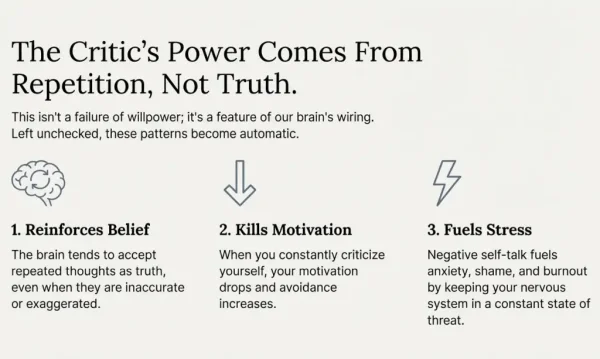
Your brain believes repetition
The brain tends to accept repeated thoughts as truth, even when they are inaccurate or exaggerated.
It affects behavior and motivation
When you constantly criticize yourself, your motivation drops and avoidance increases.
It reinforces emotional stress
Negative self talk fuels anxiety, shame, and burnout by keeping your nervous system in a constant state of threat.

What Self Compassion Actually Means
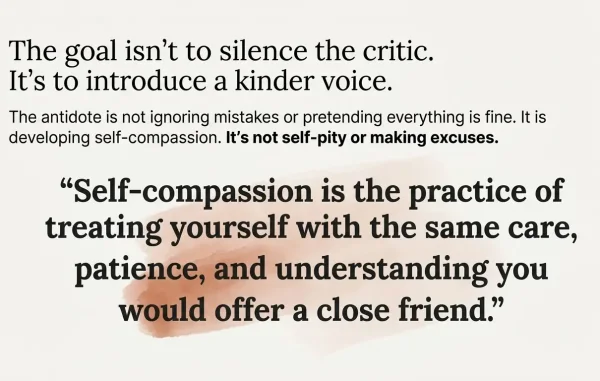
Self compassion is not self pity or making excuses. It is the practice of treating yourself with the same care, patience, and understanding you would offer a close friend.
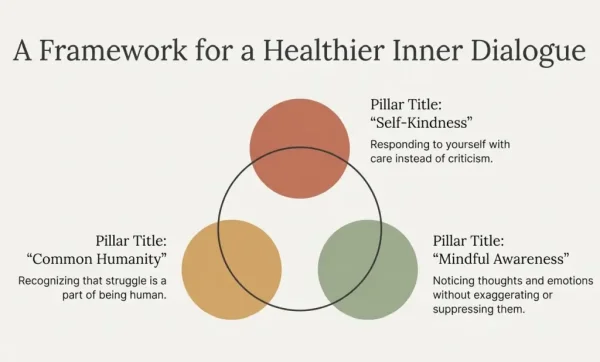
The three core elements of self compassion
- Self kindness: Responding to yourself with care instead of criticism
- Common humanity: Recognizing that struggle is part of being human
- Mindful awareness: Noticing thoughts and emotions without exaggerating or suppressing them
How to Start Rewriting Your Inner Dialogue
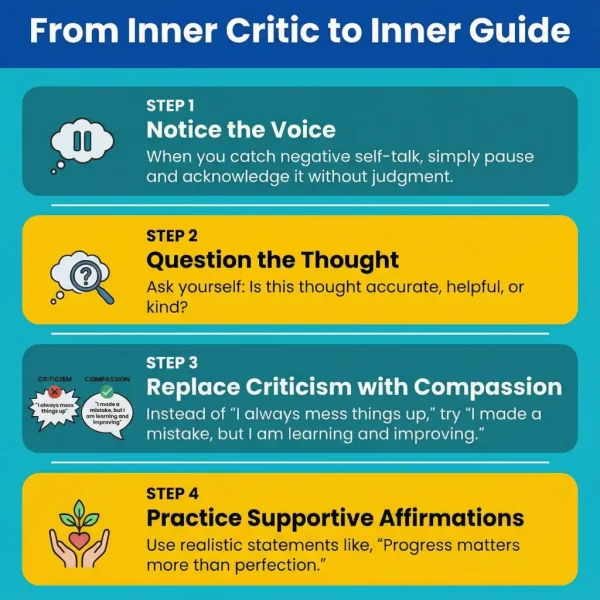
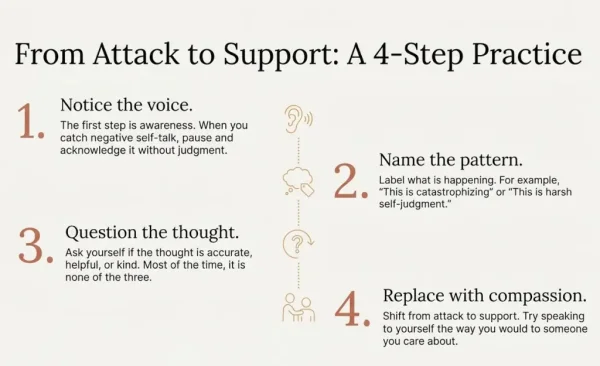
1. Notice the voice
The first step is awareness. When you catch negative self-talk, pause and acknowledge it without judgment.
2. Name the pattern
Label what is happening. For example, This is catastrophizing or This is harsh self-judgment.
3. Question the thought
Ask yourself if the thought is accurate, helpful, or kind. Most of the time, it is none of the three.
4. Replace criticism with compassion
Shift from attack to support. Try speaking to yourself the way you would to someone you care about.
Example:
- Instead of: I always mess things up
- Try: I made a mistake, but I am learning and improving
Simple Self Compassion Practices
The self compassion pause
Place a hand on your chest, take a slow breath, and remind yourself that struggle is part of growth.
Write a compassionate response
When you notice harsh self talk, write a response that offers understanding and encouragement.
Practice supportive affirmations
Use realistic, grounded statements rather than forced positivity.
- I am allowed to learn at my own pace
- Progress matters more than perfection
- I can be kind to myself while still growing
Common Mistakes When Working with Self-Talk
Trying to silence the voice completely
The goal is not elimination but awareness and redirection.
Replacing criticism with fake positivity
If the new thought does not feel believable, your mind will reject it.
Expecting instant change
Self talk patterns take time to soften. Consistency matters more than speed.
Building Long Term Emotional Resilience
When self compassion becomes part of your daily mindset, emotional resilience grows naturally. You recover faster from setbacks, take healthier risks, and remain steadier under pressure.
Over time, your inner voice shifts from being a constant critic to a supportive guide.
Final Takeaway
Overcoming negative self talk is not about becoming perfect or fearless. It is about learning to stand on your own side. When you build self compassion, you create a foundation for growth that is steady, sustainable, and deeply human.