Gratitude is more than positive thinking. When practiced consistently, it becomes a powerful way to shift your mindset, calm your emotions, and reconnect with what truly matters. Whether written in a journal, spoken aloud as a prayer, or reflected on quietly, gratitude helps move your attention away from lack and back into presence.
For many people, combining gratitude journaling with prayer creates an even deeper sense of meaning and grounding. This guide explains what a gratitude practice really is, how journaling and prayer work together, and how to start a simple routine that actually lasts.
What Is a Gratitude Practice?
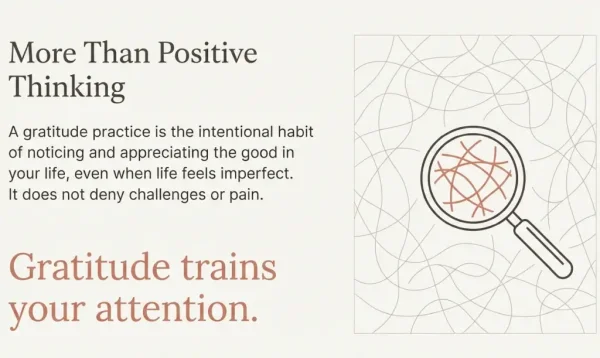
A gratitude practice is the intentional habit of noticing and appreciating the good in your life, even when life feels imperfect. It does not deny challenges or pain. Instead, it helps you see that support, growth, and meaning still exist alongside difficulty.

Gratitude is a practice of presence that trains where attention goes in the present moment. Because, as we all know, what we consistently focus on shapes how we experience life.
Why Gratitude Works
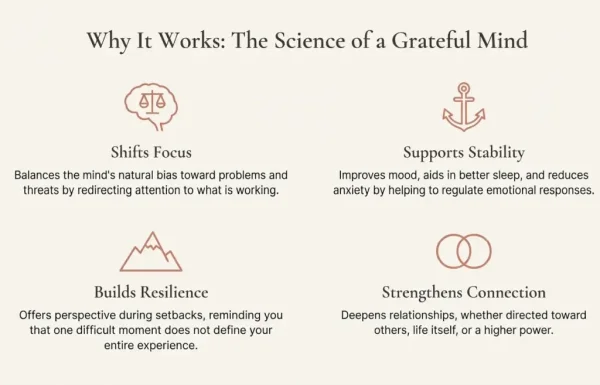
It shifts mental focus
The human mind naturally focuses on problems and threats. Gratitude redirects attention toward what is working, creating balance instead of constant stress.
It supports emotional stability
Regular gratitude practice is associated with improved mood, better sleep, and reduced anxiety. It helps regulate emotional responses rather than amplifying them.
It builds resilience
When setbacks happen, gratitude offers perspective. It reminds you that one difficult moment does not define your entire experience.
It strengthens connection
Gratitude deepens relationships, whether directed toward others, life itself, or a higher power.
The Role of Prayer in a Gratitude Practice
Prayer and gratitude are deeply connected. At its core, prayer is focused awareness and intention. When gratitude is woven into prayer, it becomes less about asking and more about recognizing what is already present.
Gratitude based prayer can look different for everyone. It may be spiritual, religious, or simply reflective. The key is sincerity, not structure.
Examples of gratitude prayer
- Thanking God or a higher power (higher self - inner power) for specific moments from your day.
- Expressing appreciation for strength during fearful challenges.
- Acknowledging guidance, protection, or lessons learned.
- Offering gratitude before asking for anything else.
This type of prayer naturally calms the mind and opens space for clarity and trust.
How to Start a Gratitude Journal
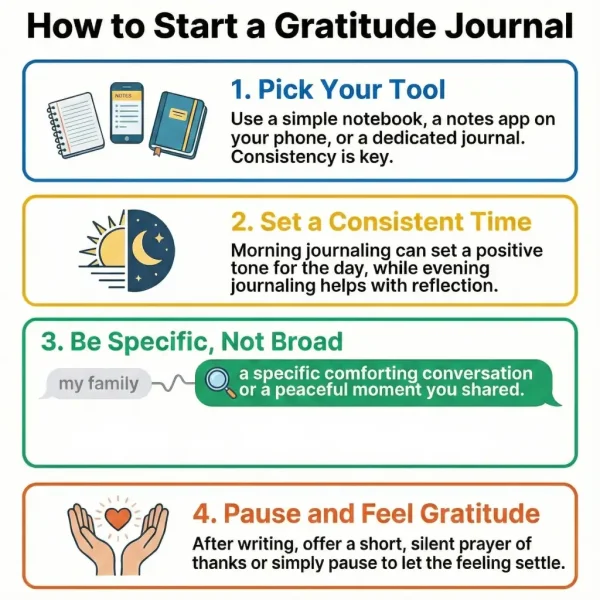
A gratitude journal works best when it is simple and personal. Consistency matters more than length.
Step 1: Choose your format
- A notebook kept by your bed.
- A daily notes app on your phone.
- A dedicated gratitude or prayer journal.
Choose the option you will actually return to.
Step 2: Pick a time
Morning journaling sets the tone for the day. Evening journaling helps you reflect and release. Either works. Consistency is what matters.
Step 3: Write 3 to 5 specific entries
Be specific. Instead of broad statements, focus on moments.
- A peaceful moment during a busy day.
- A conversation that brought clarity or comfort.
- Strength you did not realize you had.
Step 4: Add a short prayer
After writing, pause and offer a short prayer of thanks. This can be silent or spoken. Let the feeling of gratitude settle before moving on.
Common Mistakes to Avoid
Using gratitude to bypass emotions
Gratitude does not replace grief, anger, or frustration. It exists alongside them.
Being repetitive without reflection
If entries feel automatic, slow down. Depth matters more than variety.
Treating prayer like a checklist
Gratitude prayer is about presence, not performance.
Stopping when life gets difficult
Hard seasons are often when gratitude has the greatest impact, even if the entries feel small.
Ways to Deepen the Practice
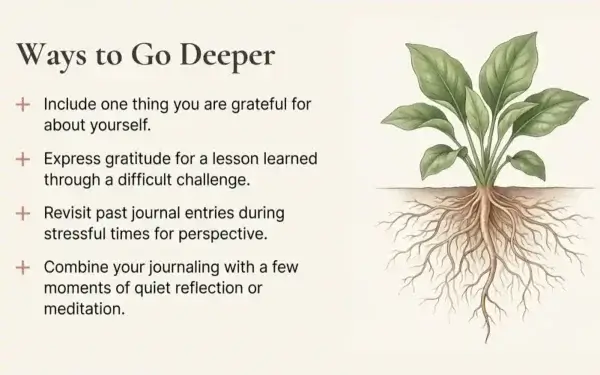
- Include one thing you are grateful for about yourself.
- Express gratitude for a lesson learned through difficulty.
- Revisit past journal entries during stressful times.
- Combine journaling with quiet reflection or meditation.
Final Takeaway
A gratitude practice that combines gratitude journaling with a gratitude prayer creates a quiet space for awareness, humility, and emotional grounding. Over time, this simple habit can reshape how you experience challenges, deepen your sense of connection, and with its presence, bring more peace into your daily life.