Mindfulness Activities and Good Habits for the Mind: Mindfulness has become one of those buzzwords everyone tosses around, but underneath the hype is something simple: learning how to actually be where you are. If your mind is usually running laps in the background, mindfulness gives you a way to pause, reset, and feel more grounded. You do not need a meditation cushion, incense, or monk levels of discipline. You just need a few minutes and a willingness to pay attention.
If you have ever thought, I know I should slow down, but I do not even know where to start, this guide is your on ramp. Below, we break down what mindfulness really is, why it matters, and simple activities you can use today... this is especially helpful for those looking to stay present while looking to quiet that "Always On Mind".
What Is Mindfulness, Really?
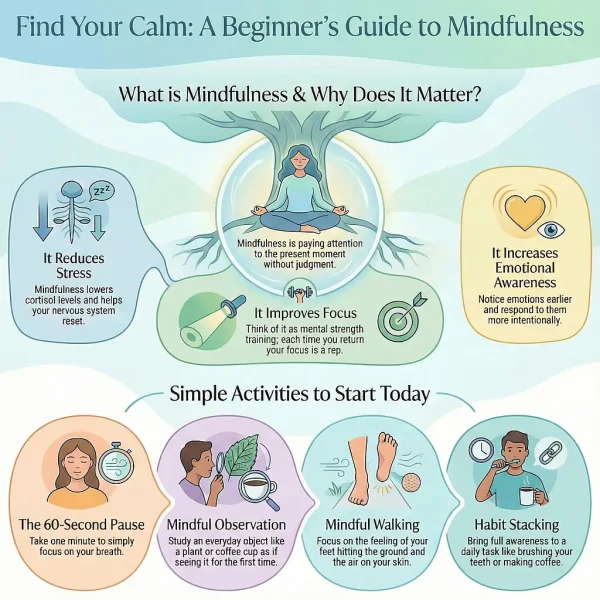
Mindfulness is the practice of paying attention to the present moment without judgment. The key phrase is without judgment. You are not trying to fix your thoughts or force them into silence. You are simply noticing what is happening in your mind and body, then gently bringing your attention back when it wanders.
Think of it like mental strength training. Every time your mind drifts and you return to the moment, that is a rep. Over time, those reps build awareness, calm, and emotional resilience.
The Core Elements of Mindfulness
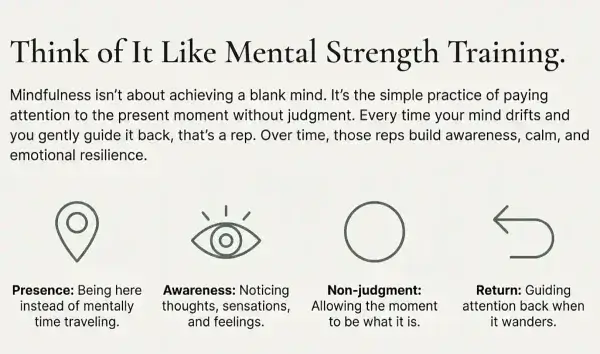
- Presence: Being here instead of mentally time traveling
- Awareness: Noticing thoughts, sensations, and feelings
- Non judgment: Allowing the moment to be what it is
- Return: Guiding attention back when it wanders
Why Mindfulness Activities Matter
There's a return on investment that comes with Presence and here's why it matters:
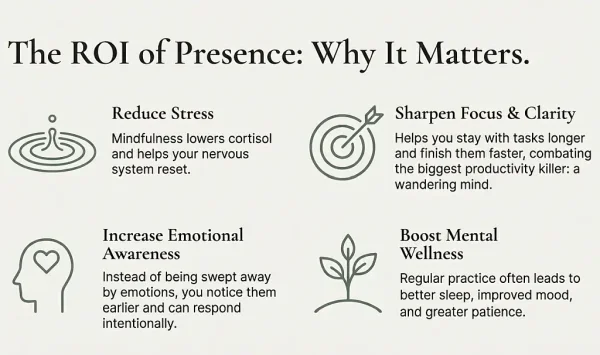
It reduces stress
Mindfulness lowers cortisol and helps your nervous system reset.
It improves focus and clarity
A wandering mind is the biggest productivity killer. Mindfulness helps you stay with tasks longer and finish them faster.
It increases emotional awareness
Instead of being swept away by emotions, you notice them earlier and respond intentionally.
It boosts overall mental wellness
Regular practice often leads to better sleep, improved mood, and greater patience.
Mindfulness Activities You Can Use Today
You do not need long sessions or perfect silence. Start small and let your practice grow naturally.
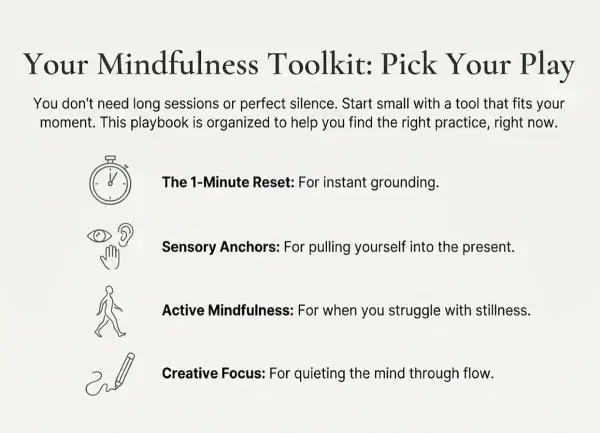
1. The 60 Second Pause
Take one slow minute to focus on your breath. Inhale, exhale, notice the rise and fall. If your mind drifts, come back to the breath. Simple and powerful.
2. Mindful Breathing (2 to 5 minutes)
- Sit comfortably
- Inhale for a slow count of 4
- Exhale for a count of 6
- Keep noticing the breath without forcing it
This relaxes your nervous system and helps settle racing thoughts.
3. Mindful Observation
Pick something in your environment, like a plant, light, or your coffee cup, and study it as if you are seeing it for the first time. Notice colors, shapes, and textures. This grounds the mind in the present moment.
4. Body Scan Check In
Starting at your feet and moving upward, notice any tension or sensations. No need to change anything. Awareness alone often relaxes the body.
5. Mindful Walking
During a short walk, focus on the feeling of your feet hitting the ground, the movement of your legs, and the air on your skin. Let the world pull you into the moment.
6. Mindfulness Habits During Everyday Tasks
Try bringing full awareness to simple activities like:
- brushing your teeth
- washing dishes
- showering
- making coffee
Anchor on one sense: touch, sound, or smell.
7. Guided Meditation (great for beginners)
Short guided audio or video can walk you through breathing, relaxing the body, or observing thoughts. This is one of the easiest ways to start if sitting in silence feels intimidating.
8. Sensory Based Mindfulness
These exercises anchor you in the moment by focusing on your senses.
- Mindful listening: Tune in to sounds around you without labeling them good or bad.
- Deep seeing: Choose an object and notice fine details like texture, color, or patterns.
- Sensory surprise bag: Place objects with different textures in a bag and identify them only by touch. This is fun and surprisingly grounding.
9. Mindful Eating
Slow down during a meal. Notice the colors, smells, textures, and flavors. Savor each bite instead of eating on autopilot. Even one mindful minute during a snack counts.
Creative and Movement Based Mindfulness
These practices mix awareness with movement or creativity, which can help people who struggle with stillness.
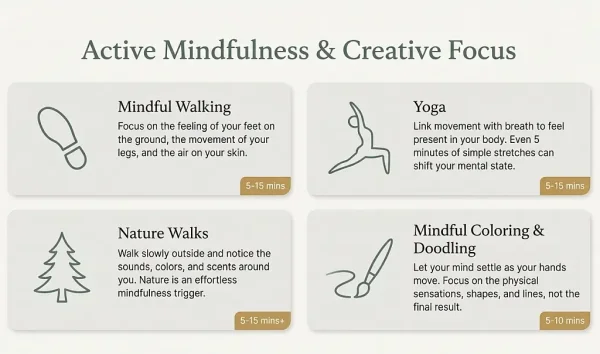
10. Mindful Coloring or Creative Art
Coloring, doodling, or painting lets your mind settle while your hands move. Focus on shapes, lines, and sensations rather than the final result.
11. Nature Walks
Take a slow walk outside and notice the sounds, colors, and scents around you. Nature is one of the most effortless mindfulness triggers.
12. Yoga
Yoga links movement with breath, helping you feel present in your body. Even 5 minutes of simple stretches can shift your mental state.
Common Mistakes (and How to Avoid Them)
Give it time, don't be hard on yourself. It takes practice to become successful in Mindfulness.
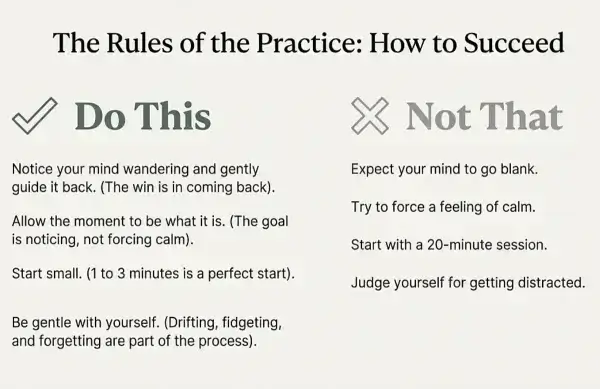
Expecting your mind to go blank
If your mind wanders, that means you are human. The win is in coming back, not achieving silence.
Forcing calm
Mindfulness is not about making a moment feel different. It is about noticing it as it is.
Starting too big
If you go straight for 20 minute sessions, you may bail. Start with 1 to 3 minutes and grow from there.
Judging yourself
You will drift, fidget, get annoyed, or forget. That is part of the process. Stay gentle with yourself.
How to Build Mindfulness Habits That Stick
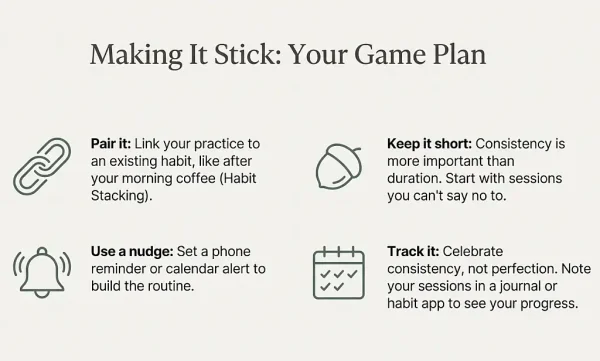
- Pair it with an existing habit (habit stacking)
- Keep sessions short at first
- Use phone reminders or calendar nudges
- Celebrate consistency, not perfection
- Track it in a journal or habit app
The real power of mindfulness shows up not on day one, but on day 30 when you realize you are calmer, more aware, and more in control than you were before.
Final Take on Forming Mindful Habits
Taking part in daily mindfulness activities or mindful good habits is one of the simplest and most effective ways to improve your mental well being while keeping you grounded in presence, and anyone can do it. Start small, stay patient, and let the practice build naturally. Every minute you commit to awareness strengthens your mind, steadies your emotions, and helps you show up more fully in your life.