
How to Take Full Control of Cookies on Windows 10 and Windows 11: Cookies are small data files created by websites to remember information about you. They keep you logged in, save preferences, track sessions, and in many cases, follow your activity across the web.
Cookie Control
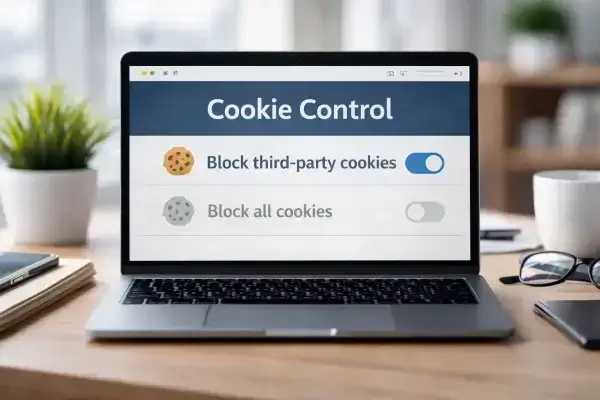
In the past, Windows and Internet Explorer handled much of this at the operating system level. Today, cookie control lives primarily inside your browser. On modern systems like Windows 10 and Windows 11, your privacy is shaped by the settings in Edge, Chrome, and Firefox.
Understanding how cookies work and how to control them lets you decide what your computer remembers, what it forgets, and who is allowed to track you.
What Cookies Do Today
There are two main types of cookies:
- First party cookies are created by the site you are visiting. They handle logins, shopping carts, and preferences.
- Third party cookies are created by outside services like ad networks and trackers. These are often used for profiling and advertising.
Blocking all cookies can break logins and forms. Blocking third-party cookies usually improves privacy with little downside.
Cookie Control in Microsoft Edge
- Open Edge and click the three dots in the top right.
- Select Settings.
- Go to Privacy, search, and services.
- Under Tracking prevention, choose Balanced or Strict.
- Scroll to Cookies and site permissions and click Manage and delete cookies and site data.
- Enable Block third-party cookies.
From this same area you can:
- View all stored cookies
- Delete cookies for specific sites
- Set per-site permissions
- Clear cookies when Edge closes
Cookie Control in Google Chrome
- Click the three dots in the top right and open Settings.
- Select Privacy and security.
- Click Third party cookies.
- Choose Block third party cookies.
To manage individual sites:
- Go to Settings > Privacy and security > Site settings > Cookies and site data.
- View or remove cookies per site.
- Add exceptions for sites you trust.
Cookie Control in Firefox
- Click the menu button and choose Settings.
- Select Privacy & Security.
- Under Enhanced Tracking Protection, choose Standard or Strict.
- Scroll to Cookies and Site Data to manage stored cookies.
Firefox also allows you to automatically delete cookies when the browser closes while keeping exceptions for sites you trust.
What Happens When You Block Cookies?
- You may be logged out of sites more often
- Shopping carts may reset
- Preferences may not be remembered
- Tracking across sites is greatly reduced
This is why most people block third-party cookies while allowing first-party cookies to function normally.
Cookies vs Cache
Cookies store identity and session data. Cache stores images and files to speed up page loading. Clearing cache frees space and refreshes pages. Clearing cookies affects logins and personalization.
They serve different purposes and can be managed independently.
Final Take on Cookie Control
On modern Windows systems, privacy is controlled at the browser level. You no longer need to hunt through system folders or legacy control panels. With a few settings, you can:
- Block tracking networks
- Control what sites remember
- Delete stored data at will
- Balance convenience with privacy
Taking control of cookies is no longer about digging into Windows internals. It is about telling your browser exactly how much of you the web is allowed to remember.