
Installing software on a Mac is actually easier than on Windows or Linux, though it can be a little confusing if you’re new to macOS. The process is simple and usually involves just three steps:
- Step 1: Acquiring
- Step 2: Unpacking
- Step 3: Installing
Step 1: Acquiring Mac Software
First, acquire the software either from a CD, DVD, or the internet. Software downloaded from the internet is often compressed. Common compressed formats include .zip, .sit, .sitx, and .dmg files. If installing from a CD or DVD, you can skip the next step, as these files are usually already uncompressed.
Step 2: Unpacking Mac Software
Simply double-click the .dmg, .sit, .sitx, or .zip file. If it’s a disk image (.dmg), macOS will mount it like a virtual drive.
Step 3: Installing Mac Software
There are two ways to install software on a Mac:
A: Using an Installer Package
If the software comes with its own installer, it will look something like this:

Double-click the package to open the installer. You’ll be guided through an automated installation process, like this:
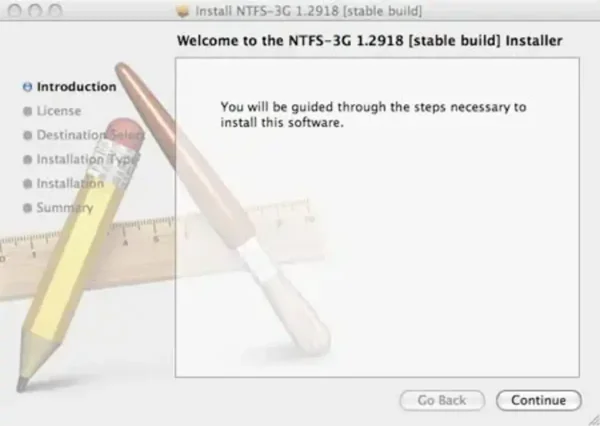
Follow the on-screen instructions, and the application will install automatically.
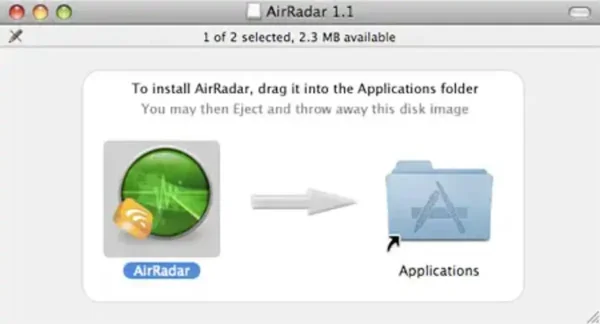
B: Manual Installation (Drag and Drop)
Some applications don’t include an installer. To install these, simply drag the app icon into your Applications folder:
Cleaning Up After Installation
Once the software is installed:
- Eject any mounted disk images: Control + Click the mounted image → Eject.
- Move the original installer file to the Trash: Control + Click the file → Move to Trash.
That’s it! Your Mac software is now installed and ready to use.