
Pool pH Is Normal but Alkalinity Is High; is your pool's pH perfectly balanced, but the total alkalinity reading is still high? You're not alone. Many pool owners get confused when their pH looks ideal, but the water still becomes cloudy, develops scale buildup, or causes chlorine performance issues.
In many cases, I have noticed high alkalinity to be the hidden cause. If sodium bisulfate (pH Down) does not seem to be fixing the problem, there is a good reason for that.
This simple solution explains how to safely lower total alkalinity using muriatic acid without crashing your pool's pH in the process.
So Your Pool's pH Is Normal but Alkalinity Is High?
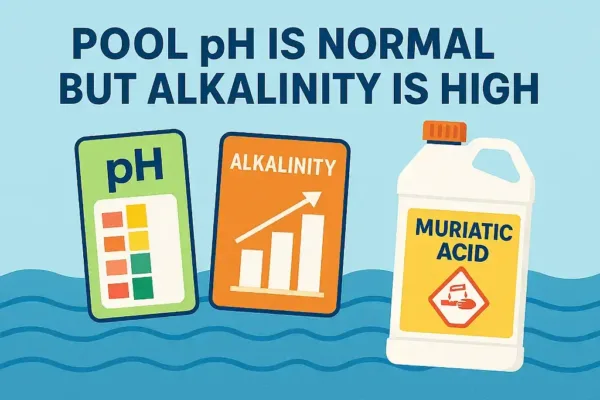
At first, this situation seems confusing. If the pH level is already balanced, why does alkalinity matter?
The answer is that total alkalinity acts like a buffer for pH. When alkalinity becomes too high, it can make your water chemistry difficult to control. Even though the pH may look perfect right now, the water can still become unstable over time.
High alkalinity often causes:
- Cloudy or dull pool water
- Scale buildup on pool walls and equipment
- Reduced chlorine effectiveness
- Constant pH drift or "pH bounce"
- Difficulty lowering pH levels later
If your pH is within the ideal 7.2 to 7.6 range but your total alkalinity is above 120 ppm, it is usually time to start correcting the imbalance, especially once alkalinity climbs toward 150 ppm or higher.
Quick Answer: Why Is Alkalinity High but pH Normal?
This usually happens because alkalinity and pH are related but not identical measurements. Total alkalinity measures the water's buffering capacity, while pH measures how acidic or basic the water currently is. Your pH may temporarily remain balanced even while alkalinity slowly rises from hard water, chemical additions, evaporation, or frequent top-offs.
Why High Alkalinity Is a Problem
Many pool owners ignore high alkalinity because the pool still "looks okay" at first. Unfortunately, problems often build slowly over time.
When alkalinity remains too high for long periods, you may notice:
- White calcium scale around tile lines
- Cloudy water that keeps returning
- Chlorine becoming less effective
- Frequent pH increases after adjustments
- Reduced efficiency from heaters and pumps
One of the most frustrating symptoms is constantly fighting rising pH levels. High alkalinity naturally pushes pH upward, especially in pools with waterfalls, fountains, spa spillovers, or strong return jets.
Sodium Bisulfate Isn't Working, Why?
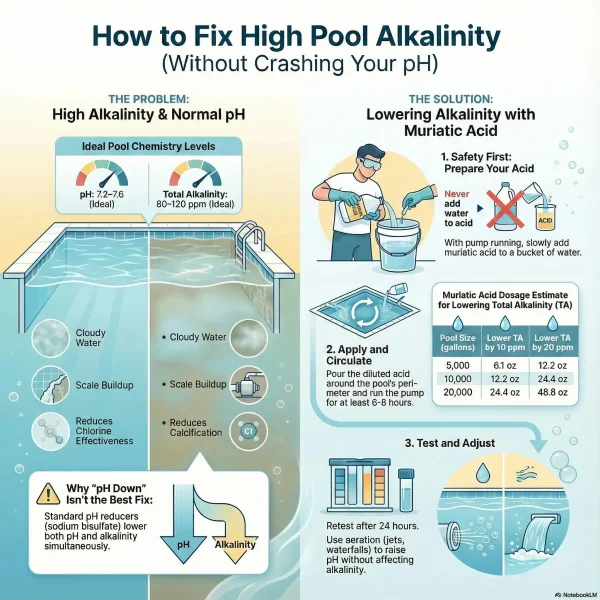
Sodium bisulfate, also called dry acid or pH Down, lowers both pH and alkalinity at the same time. The problem is that if your pH is already normal, dry acid often lowers the pH too quickly before alkalinity drops enough to make a real difference.
This leaves many pool owners trapped in a cycle where:
- They add pH Down
- The pH crashes too low
- They raise the pH again
- The alkalinity barely changes
That is why muriatic acid is usually the better long term solution for targeting alkalinity specifically.
Lowering Pool Alkalinity with Muriatic Acid
If your alkalinity is too high but your pH remains normal, muriatic acid is one of the most effective ways to gradually bring alkalinity back into range.
The Better Option: Use Muriatic Acid to Target Alkalinity
Muriatic acid (hydrochloric acid) is stronger and more effective for lowering total alkalinity. The key is understanding how to use it correctly.
Muriatic acid lowers both pH and alkalinity initially, but afterward you can naturally raise the pH again through aeration without increasing alkalinity. This creates a controlled cycle that slowly reduces total alkalinity over time.
This process is often called the:
- Acid down, aeration up method
The process takes patience, but it gives you much better control compared to repeatedly using dry acid products.
How Aeration Raises pH Without Raising Alkalinity
Aeration removes carbon dioxide from the water, which naturally raises pH levels without significantly increasing total alkalinity.
Common ways to aerate pool water include:
- Pointing return jets upward
- Running waterfalls or fountains
- Spa spillovers
- Pool splashing and swimming activity
- Air compressors or aeration devices
This is why muriatic acid works so well for alkalinity control. You lower both values temporarily, then allow pH to recover naturally through aeration.
How Much Muriatic Acid to Lower Alkalinity?
The amount of muriatic acid needed depends on:
- Pool size
- Current alkalinity level
- Desired alkalinity reduction
- Water chemistry conditions
As a general starting point:
- To lower total alkalinity by approximately 10 ppm in a 10,000 gallon pool: Add roughly 12.2 oz (0.375 L) of standard 31.45% muriatic acid.
Always test your water before making adjustments.
💧 Muriatic Acid Calculator for Pools
You can use my self built calculator to estimate how much muriatic acid (31.45%) is needed to lower your pool's total alkalinity based on your pool size and target reduction.
💡 For best results, I like to add acid gradually while the pump is running, then use aeration afterward to help restore pH naturally.
Muriatic Acid Dose for Alkalinity Reduction
Muriatic Acid Dosage Chart
Use the table below as a general reference for lowering total alkalinity. Amounts are approximate and based on standard 31.45% strength muriatic acid.
Note: You can buy the muriatic acid I personally use from my Amazon affiliate link.
| Pool Size (gallons) | Lower TA by 10 ppm | Lower TA by 20 ppm | Lower TA by 30 ppm |
|---|---|---|---|
| 5,000 | 6.1 oz (180 mL) | 12.2 oz (360 mL) | 18.3 oz (540 mL) |
| 10,000 | 12.2 oz (360 mL) | 24.4 oz (720 mL) | 36.6 oz (1.08 L) |
| 15,000 | 18.3 oz (540 mL) | 36.6 oz (1.08 L) | 54.9 oz (1.62 L) |
| 20,000 | 24.4 oz (720 mL) | 48.8 oz (1.44 L) | 73.2 oz (2.16 L) |
Important: Always make gradual adjustments and retest water chemistry after each treatment.
Best Time to Add Muriatic Acid
The best time to add muriatic acid is during the early morning or evening when direct sunlight is lower.
This helps:
- Reduce chlorine loss from UV exposure
- Improve circulation time before swimming
- Allow chemicals to distribute more evenly
Wait at least 30 to 60 minutes before swimming after adding acid, and always retest your water afterward.
Lowering Pool Alkalinity with Muriatic Acid
- Turn on the pool pump. Proper circulation helps distribute acid safely throughout the water.
- Fill a clean plastic bucket about 3/4 full with water.
- Slowly add the measured muriatic acid into the water. Never pour water into acid.
- Carefully pour the diluted solution around the pool perimeter while the pump is running.
- Allow the system to circulate for 6 to 8 hours.
- Retest alkalinity and pH after 24 hours.
- Repeat gradually if needed.
I've noticed that small adjustments seem safer than trying to fix alkalinity all at once.
Important Safety Tips
- Always wear gloves and eye protection when handling muriatic acid.
- Always add acid to water, never water to acid.
- Store muriatic acid in a cool, ventilated area away from children and pets.
- Avoid breathing acid fumes directly.
- Never mix pool chemicals together.
What If My pH Drops Too Low?
If your pH falls below 7.0, you can safely raise it using:
- Soda ash (sodium carbonate)
Soda ash raises pH much more effectively than alkalinity, making it useful for correcting low pH after alkalinity treatments.
If the pH only drops slightly, simple aeration may naturally bring it back up over time without adding additional chemicals.
Common Mistakes When Lowering Alkalinity
Many pool owners accidentally make the problem worse by:
- Adding too much acid at once
- Using dry acid repeatedly
- Ignoring aeration
- Retesting too quickly
- Trying to adjust alkalinity and calcium hardness simultaneously
Pool chemistry works best when changes are made slowly and methodically.
Final Thoughts on Lowering Total Alkalinity
If a pool's pH appears normal but total alkalinity remains high, it is important to correct the imbalance before larger water chemistry problems develop.
High total alkalinity can slowly reduce chlorine effectiveness, create persistent cloudy water, and lead to calcium scale buildup throughout your pool system.
Muriatic acid remains one of the best tools for gradually lowering alkalinity while maintaining control over pH. By using smaller adjustments and allowing aeration to naturally restore pH afterward, you can safely bring your pool chemistry back into balance.
As always, test frequently, stay patient, and avoid making large chemical corrections too quickly. Consistent small adjustments usually produce the clearest and healthiest pool water over time.
Other DIY Pool Related Stuff:
- How to Raise Alkalinity Without Affecting pH
- How to Clear Cloudy Pool Water Fast
- How to Winterize a Pool without Draining Water
- Chlorine Level Not Registering?