
Wondering how to read tire size numbers? The letters and numbers on your tire sidewall, like P215/65R15 95H DOT 3523, are not random. They form a standardized code that reveals your tire's width, sidewall height, construction, wheel size, load capacity, speed rating, and manufacturing date.
What Do Tire Size Numbers Mean?
Tire size numbers are a standardized code that identifies a tire's dimensions, load capacity, speed rating, and age.
If you have ever looked closely at your tires, you have probably noticed a long string of letters and numbers molded into the sidewall. While they may look confusing at first glance, each part of the tire code follows a logical sequence.
This article breaks down each section of decoding tire sidewall codes so you can learn to quickly and confidently read tire size numbers and understand exactly what each marking means or what the tire sidewall code symbolizes.
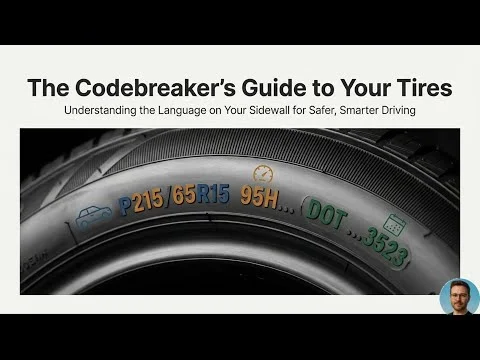
Why Tire Sidewall Numbers and Codes Matter
Tires are not universal. Using the wrong tire size or rating can lead to poor handling, reduced fuel efficiency, uneven tread wear, or even dangerous blowouts.
The markings on a tire tell you:
- The tire type and intended vehicle class
- The physical dimensions that must match your wheels
- The maximum weight the tire can safely carry
- The maximum safe speed rating
- When the tire was manufactured
Ignoring these details can cause problems even if the tire appears to fit.
How to Read Tire Size Numbers
The first part of a common tire size marking looks something like this:
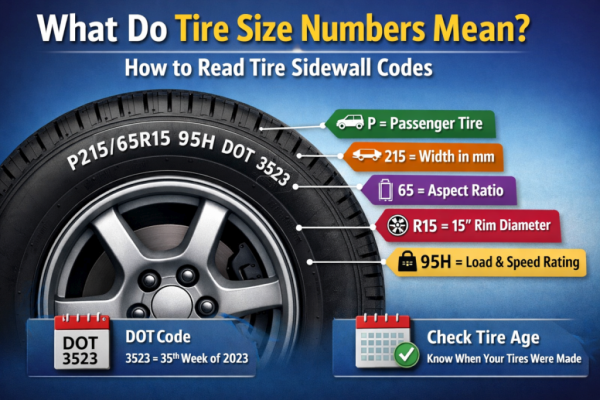
P215/65R15
Each section of this tire size code provides one specific piece of information about the tire. Next, let's break each part down.
Tire Type Letter
The first letter indicates the type of vehicle the tire is designed for.
- P means Passenger vehicle
- LT means Light Truck
- ST means Special Trailer
- T means Temporary spare
Most cars, SUVs, and minivans use passenger tires marked with a P.
Tire Width
The first number after the letter shows the tire width, measured in millimeters.
- 215 means the tire is 215 millimeters wide from sidewall to sidewall
Wider tires may provide more traction but can reduce fuel economy if not recommended by the vehicle manufacturer.
Aspect Ratio
The number after the slash is the aspect ratio. It represents the height of the sidewall as a percentage of the tire width.
- 65 means the sidewall height is 65 percent of 215 mm
Lower aspect ratios improve handling, while higher ratios offer a smoother ride.
Construction Type
The letter following the aspect ratio describes how the tire is constructed internally.
- R means Radial construction
Radial tires are the modern standard for passenger vehicles.
Rim Diameter
The final number in the size section tells you the wheel diameter in inches.
- 15 means the tire fits a 15 inch wheel
This number must match your wheel size exactly for safe installation.
Tire Load Index and Speed Rating Explained
After the tire size, you will see a combination of numbers and letters such as 95H. These ratings describe how much weight the tire can carry and how fast it can safely operate.
Load Index
The load index is a numerical code that represents the maximum weight each tire can safely support when properly inflated. This is critical for maintaining safe handling, braking, and suspension longevity.
Load index values correspond to specific weights, measured in pounds or kilograms. They do not increase linearly; each number represents a fixed weight rating.
- 91 = 1,356 pounds per tire
- 95 = 1,521 pounds per tire
- 100 = 1,764 pounds per tire
- 105 = 2,039 pounds per tire
To calculate the total weight capacity for your vehicle, multiply the tire load rating by the number of tires. For example, four tires rated 95 can support 6,084 pounds combined.
Always select a tire with a load index that meets or exceeds the factory recommendation. Using a tire with a lower load index than specified can result in excessive sidewall flex, poor handling, heat buildup, and premature tire failure.
Higher load index tires often feel firmer and provide extra durability, which is especially important for vehicles carrying heavy loads, towing, or SUVs.
Tire Speed Rating
The speed rating is a letter code that indicates the maximum safe speed a tire can maintain under its rated load. It also reflects the tire's ability to handle heat and stress at higher speeds.
Common tire speed ratings for passenger tires include:
- S = up to 112 mph (180 km/h)
- T = up to 118 mph (190 km/h)
- H = up to 130 mph (210 km/h)
- V = up to 149 mph (240 km/h)
- W = up to 168 mph (270 km/h)
- Y = up to 186 mph (300 km/h)
It is important to choose a tire with a speed rating equal to or higher than the original factory rating. A lower-rated tire can overheat, leading to tread separation or blowouts, even if you do not drive at high speeds.
Higher speed rated tires may also provide better cornering stability and heat resistance, which is useful for performance vehicles or frequent highway driving. However, the speed rating does not mean you should drive at that speed - always follow posted speed limits.
DOT Code and Tire Manufacture Date
The DOT code is a mandatory marking indicating compliance with U.S. Department of Transportation safety standards. It also shows the tire's manufacturing date, which is crucial because tires degrade over time even if they have never been used.
How to Read the DOT Date Code
The last four digits of the DOT code indicate the week and year the tire was manufactured.
- Example: DOT XXXX 3523
- 35 = 35th week of the year
- 23 = Year 2023
This tire was made in late August 2023.
Why Tire Age Matters
Tires degrade over time even if they are never driven on. As rubber ages, it loses flexibility and strength, increasing the risk of cracking or failure. Most manufacturers recommend replacing tires after six to ten years regardless of tread depth. Always check the DOT code when buying new or used tires.
When combining tires on a vehicle, try to use tires of the same age or similar manufacture dates to maintain uniform handling and wear. Additionally, storing tires properly in a cool, dry environment, away from direct sunlight, can extend their usable life.
How to Choose the Right Tire for Your Vehicle
When selecting replacement tires, always match:
- The tire size recommended by the vehicle manufacturer
- A load index equal to or higher than factory specifications
- A speed rating that meets or exceeds the original rating
- A recent DOT manufacturing date
The recommended tire size can usually be found on the driver side door jamb, in the owner's manual, or on the original vehicle window sticker.
Common Tire Size Questions
What Happens If I Change Tire Size
Changing tire size can affect speedometer accuracy, fuel economy, suspension geometry, and braking performance. Any changes should remain within manufacturer approved tolerances.
Can I Use a Higher Speed Rating
Yes. Using a higher speed rating is generally safe and may improve performance. Using a lower speed rating than recommended is not advised.
Are All Tires With the Same Size Equal
No. Tires with the same size can differ in load index, speed rating, tread design, and intended use such as all season, summer, or winter.
Final Take on How to Read Tire Size
The numbers and letters on your tire sidewall are not random. They form a standardized system that communicates critical information about size, strength, performance, and age. By understanding how to read tire size numbers and tire sidewall codes, tire load indexes, tire speed ratings, and tire manufacture date from DOT codes, you can make informed decisions that protect your vehicle and your safety.
If you are ever unsure, match replacement tires to factory specifications or consult a trusted tire professional before buying. I hope this post helps you as you venture out on your tire decoding journey. ;)
Why a VIN Lookup Sometimes Fails - What to Do