
How to Replace Trailer Bunk Carpet (Boat, Jet Ski, PWC Trailer DIY Guide)
In this guide, I walk through how to replace worn out trailer bunk carpet safely and efficiently. If you've owned a boat, jet ski, or personal watercraft (PWC) for any length of time, trailer bunk carpet replacement is one of those essential maintenance jobs that eventually becomes unavoidable.
Replacing bunk carpet helps protect your hull during loading and unloading, while also extending the life of your trailer bunks, brackets, and wood supports. This process applies to boat trailers, jet ski trailers, and PWC trailer bunk maintenance and repair.
Signs You Need to Replace Your Bunk Carpet
Don't wait until there's a hole in it. Check your bunks for:
- Thin, frayed, or matted patches where the hull rides
- Carpet separating or peeling away from the wood underneath
- Exposed staples or bare wood showing through
- A musty smell or visible mold/mildew on the carpet or boards
Once the carpet has thinned out or a hole starts to form, the exposed wood (or bare bracket) can scratch or gouge the hull every time you load or unload, so it's worth replacing before it gets that far.
Tools and Materials Needed
- Marine-grade or outdoor carpet (trailer bunk carpet)
- Heavy-duty staple gun (manual or pneumatic)
- Stainless steel or Monel staples (T50 1/4” recommended)
- Sharp scissors or utility knife
- Flathead screwdriver or pry bar
- Measuring tape
- Hammer (optional for stubborn staples)
- Replacement trailer bunks (if needed)
- Marine-grade adhesive spray or contact cement (optional, see below)
Choosing the Right Carpet
Not all carpet is created equal here. Skip generic indoor/outdoor carpet with a thick tar-like backing-it breaks down quickly in a marine environment and can trap moisture against the wood, leading to mold. Look for carpet specifically sold as trailer bunk carpet or marine bunk carpet, typically a polypropylene material with built-in UV and mildew resistance.
How Much Carpet Do You Need?
Measure the length and width of each bunk board, then add a few extra inches to each dimension so you have enough material to wrap and staple the underside edges. It's better to cut slightly generous and trim excess after than to come up short mid-install.
Staples or Glue?
You'll see both methods recommended, and either can work:
- Staples are the more common choice-they let the carpet flex slightly as the hull slides across it, which helps prevent tearing over time.
- Adhesive (marine spray adhesive or contact cement) gives a tighter, more secure bond and can help hold the carpet in place while you staple, but a fully glued-down carpet has less give.
Many people use both: adhesive to hold everything in place and stop shifting, staples to actually secure it long-term. Whichever you choose, stick with stainless or Monel hardware-standard steel staples will rust quickly in a wet, salty, or humid environment.
How I Replaced My Trailer Bunk Carpet
For my 1997 Yacht Club PWC trailer, which hauls a 1996 SeaDoo XP, I replaced the old bunk carpet while keeping the original wood bunks.
This is a very common scenario. In many cases, the wood is still structurally sound, but the carpet is worn thin, fraying, or starting to separate from the boards.
Before you start: make sure the boat or PWC is off the trailer and safely supported elsewhere. You'll need full access to the bunks with no weight on them.
Steps: Replacing Trailer Bunk Carpet
- Remove the bunks from the trailer.
Unbolt the mounting brackets and carefully remove the bunk boards from the trailer frame. Inspect the wood for rot, cracks, or warping before reuse. - Remove old bunk carpet.
Use a flathead screwdriver or pry bar to lift staples at each end. In many cases, the carpet will peel away and remove most staples with it. For stubborn staples, tap gently with a hammer or work them loose slowly. Once the carpet is off, scrape away any old glue residue and lightly sand the boards so the new carpet sits flush.
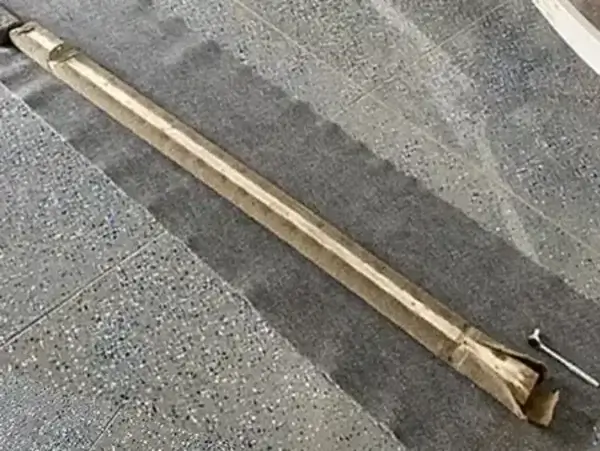
- Cut new trailer bunk carpet.
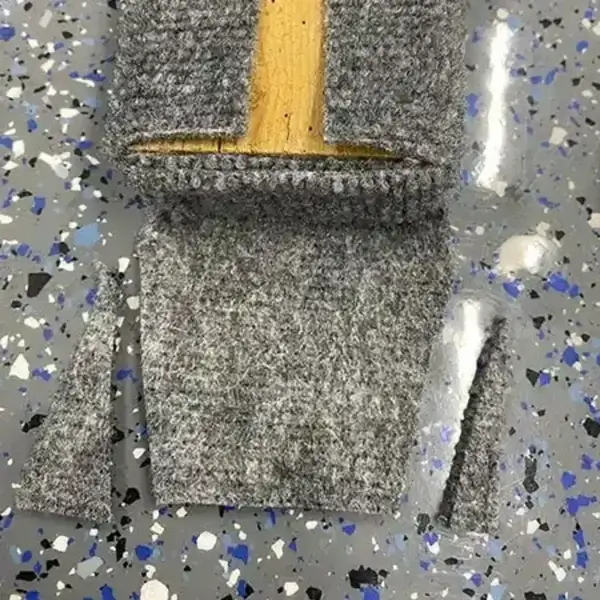
Lay the old carpet over the new material and use it as a template. Mark your outline and cut carefully with sharp scissors or a utility knife. Leave a slight overhang for wrapping edges.
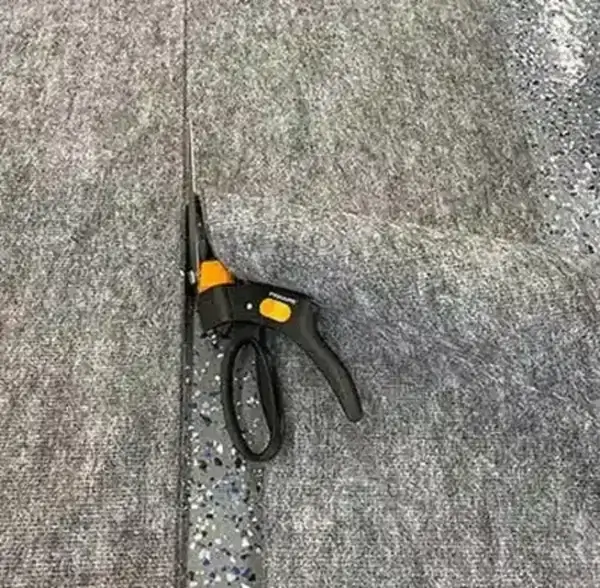
- Align and center the carpet.
Place the new carpet on the bunk board and align it evenly. Make sure both sides are centered before stapling to avoid wrinkles or uneven tension. If you're using adhesive, spray both the board and the carpet backing now, and press them together before you start stapling.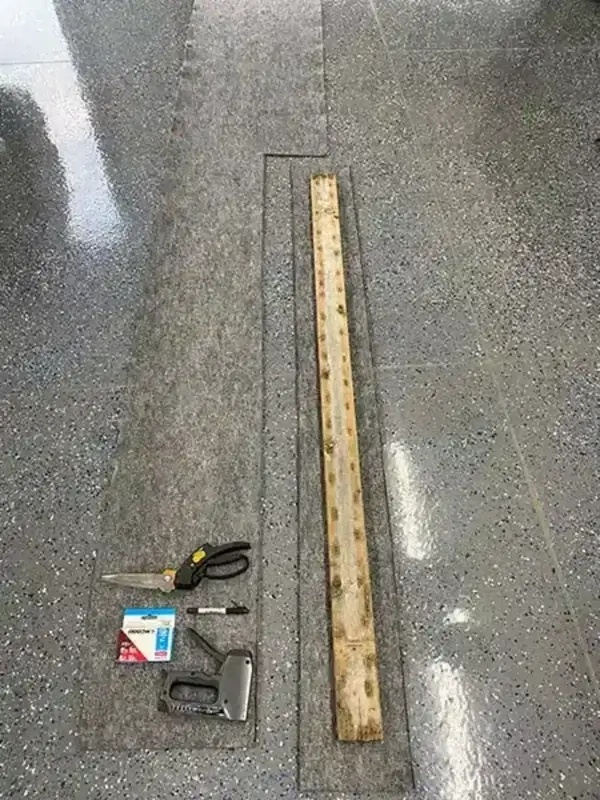
- Staple the carpet in place.
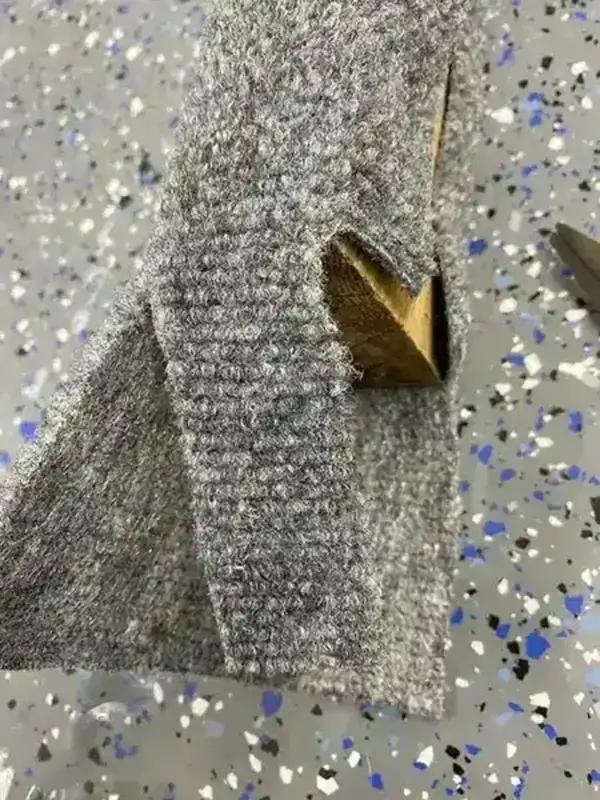
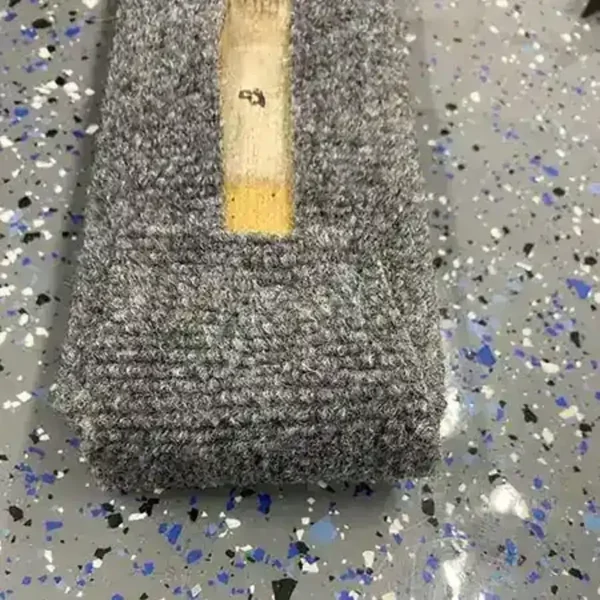
Start at one end with 2 to 3 staples. Pull tight, then move to the opposite side. Continue alternating sides while maintaining consistent tension. Avoid overstretching. - Wrap and secure the ends.
Fold corners like a gift wrap and staple securely. Trim excess material to prevent water trapping and fraying.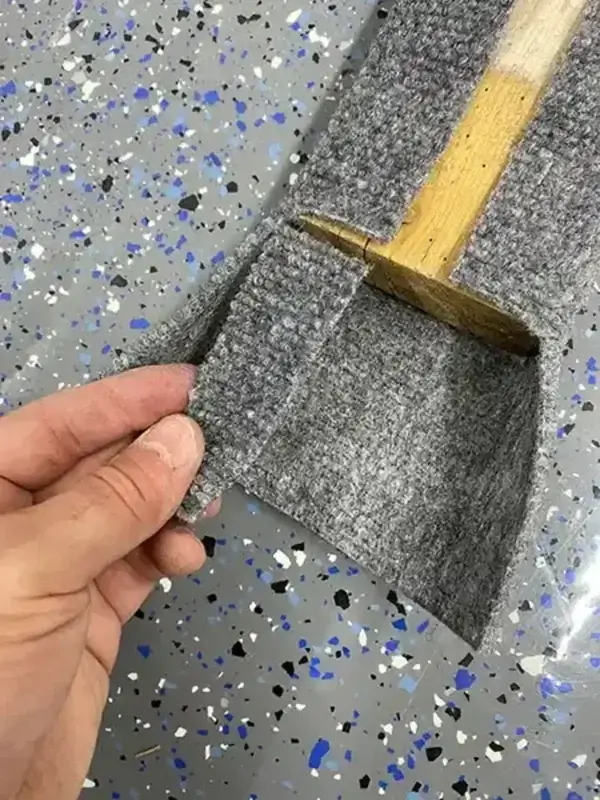
- Reinstall bunks on trailer.
Bolt the bunks back onto the trailer brackets. Ensure everything is level and aligned for smooth loading and unloading of your boat or PWC.
Extra Tips for a Professional Finish
- Use marine-grade adhesive spray under carpet for extra durability
- Sand and seal old wood bunks before re-covering
- Measure twice, cut once to avoid waste
- Add rubber edge trim for high wear areas
- Inspect bunks yearly for loose staples or wear
Project Complete
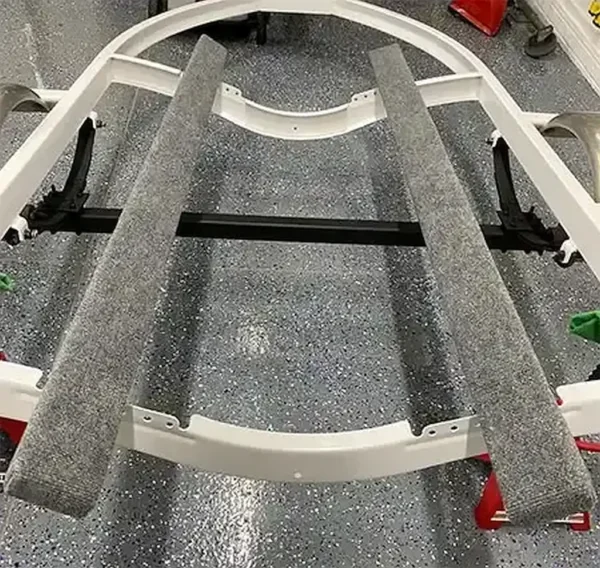
Here is the final result after completing the trailer bunk carpet replacement on my 1997 Yacht Club trailer setup.
Frequently Asked Questions
How often should I replace trailer bunk carpet?
There's no fixed schedule-it depends on usage and storage conditions-but inspect it at least once a year and replace it as soon as it looks thin, frayed, or exposed, rather than waiting for a hole to form.
Should I use staples or glue to attach bunk carpet?
Staples are the more common method since they let the carpet flex slightly during loading, reducing tearing. Adhesive gives a tighter bond and is often used alongside staples rather than instead of them.
What kind of carpet should I use for trailer bunks?
Use carpet made specifically for marine/trailer bunk use, typically polypropylene with UV and mildew resistance, rather than standard indoor/outdoor carpet, which breaks down faster in a marine environment.
Do I need to replace the wood bunks too?
Not necessarily. If the wood is free of rot, cracks, or warping, you can reuse the existing bunks and just replace the carpet, as I did on my own trailer.
Can I replace bunk carpet without removing the bunks from the trailer?
It's possible, but removing the bunks makes it much easier to staple securely, inspect the wood, and get a clean, even wrap around the edges.
How much does it cost to replace trailer bunk carpet?
Materials alone (carpet, staples, and adhesive if used) are generally inexpensive for a DIY job-most of the cost is in the carpet itself, which varies by length and quality.
Final Thoughts on Trailer Bunk Carpet Replacement
Replacing trailer bunk carpet is one of the simplest and most effective DIY maintenance projects for any boat, jet ski, or PWC trailer.
It protects your hull, improves loading safety, and extends the life of your trailer components. With proper installation and occasional inspection, your bunks will last for years and make launching and retrieving your watercraft much easier and safer.