
How to Limit or Disable WordPress Post Revisions: WordPress post revisions are designed to protect your work by saving past versions of every post and page. In theory, this is a great safety net. In practice, especially on long running sites, revisions can quietly grow into thousands of extra database rows, bloating backups, slowing queries, and making your admin experience feel cluttered. One effective way to manage this issue is to delete post revisions in WordPress, reducing unnecessary clutter and optimizing your database. This can help speed up your site's performance and streamline data management. Regular maintenance and careful configuration can ensure that you're benefiting from WordPress's features without experiencing the downsides of excessive revisions.
With the modern block editor, WordPress saves frequently through both autosaves and revisions. That means a single editing session can generate dozens of stored versions. On small blogs this is harmless. On content heavy or older sites, it can become real overhead.
If you run a personal blog, a niche site, or any project where you are the sole editor, you may not need full revision history at all. You can either disable revisions completely or limit how many WordPress keeps. This guide shows both options and explains what actually changes under the hood.
When Disabling Revisions Makes Sense
- You are the only editor on the site
- You already keep regular backups
- You do not rely on historical versions of posts
- Your database has grown large over time
- You want to reduce clutter in the editor
If you manage a team site, news outlet, or collaborative project, revisions are often worth keeping. In that case, limiting them is usually the better option.
Completely Disable WordPress Post Revisions
This method stops WordPress from storing revisions for posts and pages going forward. Autosave will continue to work normally.
- Access your site files using your host file manager or an FTP client.
- Download a copy of wp-config.php as a backup.
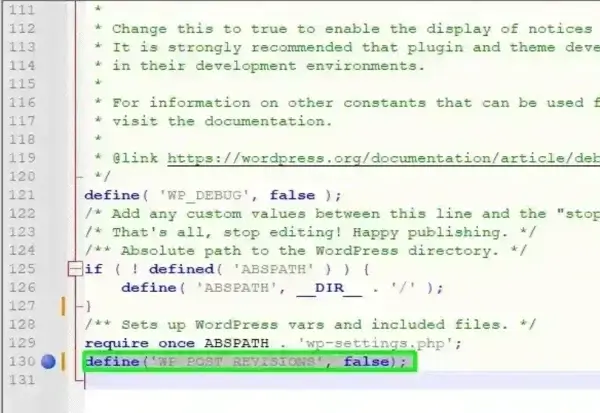
- Open wp-config.php in a text editor.
- Add the following line above the line that says
/* That's all, stop editing! */
define('WP_POST_REVISIONS', false);
Save the file and upload it back to your server, overwriting the original. From this point forward, WordPress will no longer create post revisions. You can still edit, save drafts, and rely on autosave as usual.
Limit the Number of Revisions Instead
If you prefer a safety net without unlimited growth, you can cap how many revisions WordPress stores per post.
In wp-config.php, add this instead:
define('WP_POST_REVISIONS', 5);
You can replace 5 with any number you prefer. This will limit post revisions to your set value and WordPress will automatically discard older revisions once that limit is reached. This is often the best balance between safety and performance.
What This Does and Does Not Affect
- Autosave continues to function normally
- Drafts are unaffected
- The block editor still protects against browser crashes
- Only future revisions are impacted
- You can remove or change this setting at any time
Disabling or limiting revisions does not break the editor or interfere with publishing.
Remove Existing Revisions
These settings only affect new edits. Any revisions already stored in your database remain until you remove them. If you want to clean up what already exists, see:
How to Remove WordPress Post Revisions
That guide walks through safely deleting old revisions to reclaim space and reduce database size.
Final Thoughts
Post revisions are a thoughtful feature, but they are not mandatory. On many single author sites, they provide little value while quietly consuming resources. Whether you disable WordPress post revisions entirely or simply limit post revisions by setting a cap, taking control of revisions is an easy win for long term WordPress maintenance.
A small change in wp-config.php can keep your site lean for years.