
How to Safely Erase Empty Space on a Hard Drive in Windows
When you delete files, clear your browser history, or empty the Recycle Bin, the space they occupied on your hard drive isn't immediately erased. Until overwritten, deleted data can still be recovered with data recovery tools. To protect your privacy and prevent deleted files from being recovered, you can securely wipe the empty space on your hard drive.
Option 1: Using Eraser – Free and Easy GUI Tool
Eraser is a free, open-source Windows utility that securely overwrites empty space on your drives multiple times using different algorithms, making deleted data unrecoverable. It works on Windows 10 and 11.
Official Website: https://eraser.heidi.ie/download/
How to Wipe Empty Space Using Eraser
- Download and install the latest version of Eraser.
- Right-click Eraser.exe and choose Run as Administrator.
- Click File > New Task to create a new erasure task.
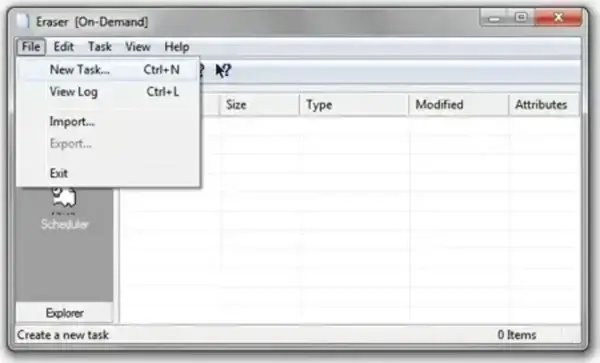
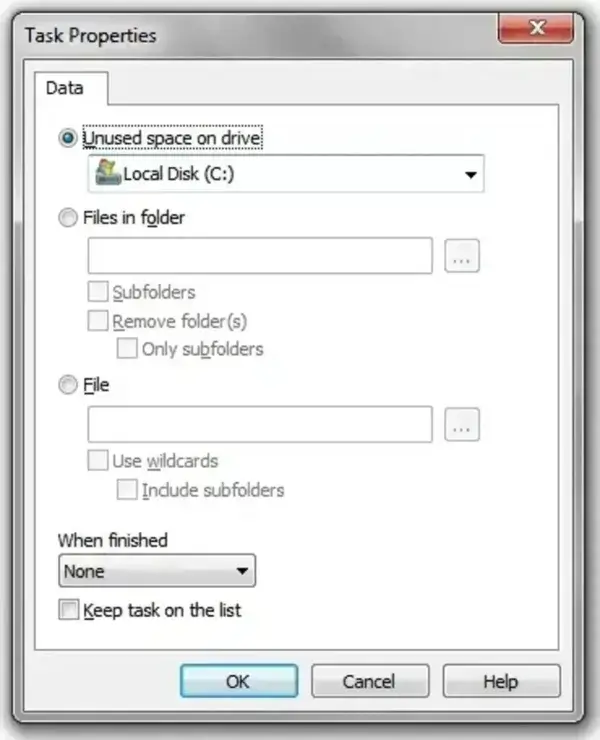
- Select Erase Unused Space on drive, choose the drive you want to wipe, and click OK.
- Right-click your task in the window and select Run to start the process.
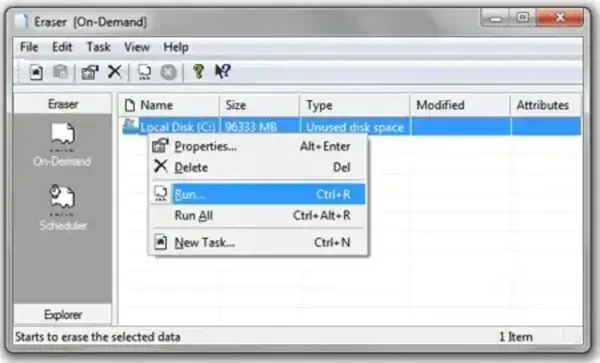
Once the task finishes, the empty space on your drive is securely erased and any previously deleted files cannot be recovered.
Option 2: Built-in Windows Method (Command Line)
If you prefer not to install software, Windows includes a built-in command to wipe free space: cipher. This works on Windows 10 and 11 and overwrites all unused space on the drive.
How to Wipe Free Space with Cipher
- Open Command Prompt as Administrator:
Press Windows Key + X > Select Windows Terminal (Admin) or Command Prompt (Admin).
- Type the following command, replacing
C:with the drive you want to clean:
cipher /w:C- Press Enter. Windows will overwrite all free space on the selected drive. This process may take a while depending on the drive size.
Note: This method only overwrites free space and does not affect your existing files.
Best Practices
- Always back up important data before performing any disk operations.
- Use Eraser or the cipher command periodically to maintain privacy.
- For SSDs, check if your drive supports Secure Erase or TRIM commands, as traditional overwriting is less effective on solid-state drives.
Why Wiping Empty Space Matters
Deleted files can remain recoverable until overwritten, which is a risk if your hard drive is sold, recycled, or shared. Securely erasing free space prevents recovery tools from retrieving deleted content, keeping your personal data safe.
Related Searches: erase free space Windows, wipe empty hard drive, securely delete deleted files, prevent file recovery, cipher wipe Windows 10