
A stuck pixel is a screen pixel that remains one color instead of changing correctly; a dead pixel usually stays black because it no longer lights up. A stuck pixel may sometimes recover with a color-cycling test, while a truly dead pixel generally cannot be repaired with software. This guide explains how to test for dead or stuck pixels and what you can safely try before replacing a display.
How to test an LCD for Dead or Stuck Pixels
You can use a free pixel fixing software tool called dead pixel buddy to test a monitor for dead or stuck pixels. Here's how:
- Download Dead Pixel Buddy and then run the software.
- Follow the onscreen instructions to test for dead pixels.
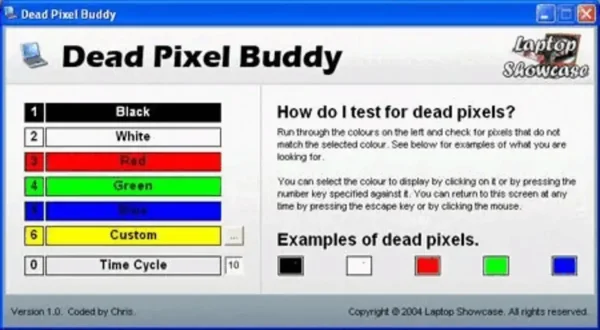
stuck pixel fixer
If the test reveals a colored dot on the black screen, you have a sticky pixel. If the suspicious dot does not appear on the black screen, but does appear on all other colored screens, you have a dead pixel (which is unfixable using this method).
How to Fix Stuck Pixels
A non-contact pixel-fixer program displays rapidly changing colors in an attempt to help a stuck pixel resume normal operation. Results are not guaranteed, and software cannot repair a truly dead pixel. Avoid physical pressure or tapping, which can damage the display.
Important: Most monitors marketed as “LED” monitors are actually LCD panels with LED backlighting, so LCD pixel tests may still apply. These methods do not repair a truly dead pixel, and LCD pixel-fixing software is not a fix for OLED pixel faults. Avoid pressing or tapping the screen: physical pressure can damage the panel and may void the warranty. Try a color-cycling test first, then check the display manufacturer’s support and warranty guidance.
Stuck Pixel Fixer Software Method
- Download Pixel Healer Portable zipped file. (Note: you can only fix a pixel that is stuck not dead ones).
- Extract the contents of the zipped file.
- Run the stuck pixel fixer executable PixelHealer.exe
- The program then randomly and quickly changes background colors in an attempt to activate the pixel. It is best to simply resize and move the video window to affect just the area of the problem pixel.
Why You Should Avoid Pressure and Tapping
Some older guides recommend pressing or tapping a stuck pixel, but these techniques can damage the display, create additional pixel faults, or affect the screen coating. We do not recommend them. Start with a non-contact color-cycling test and consult the monitor manufacturer if the pixel remains.